Table of Contents
- What This Framework Is
- Where This Sits
- The Three Modes
- Two Axes: Architecture and Piloting
- Reading a Deck
- What This Is Not, and Where It Breaks
1. What This Framework Is
Fountain/Spotlight/Shadow (F/S/S) describes the kinds of work generosity does at a Commander table.
It began as a question about my own decks: how much Fountain, Spotlight, and Shadow does this list hold? Somewhere along the way the answer stopped behaving like a report card and started behaving like a map. It shows where a deck's weight sits, and the directions its generosity can travel.
So I use it two ways:
as a deckbuilding lens, for what I have built the deck to do; and
as a piloting lens, for what the room needs at this moment.
The split matters because a card can hold one role in the list and take another when it hits the table. I build Howling Mine as Fountain. Played early against someone who is stalled, it reads as Spotlight. Fed into a draw payoff, it hands an opponent pressure, and that is Shadow.
I build the architecture. The choices are mine to make in the game.
2. Where This Sits
Group Hug already has a working vocabulary. Kieran Sheldon separates universal effects, which tend to favour the strongest deck, from selective ones that steer help toward whoever is falling behind. Sheldon Menery treats generosity as part of Commander's social contract and warns that a friendly effect can become an offensive tool. Spice8Rack goes even further, arguing that symmetrical gifts reproduce equality of opportunity, which flatters the strongest player, and that a "true" Group Hug deck should redistribute toward equity.
I agree with much of what's been said. Abundance is never innocent, help can be aimed, and generosity can carry consequences. But I don't want to decide which of these a deck should be. F/S/S treats them as modes of power rather than positions on fairness. It asks a question we haven't asked ourselves before: who decided that this player was behind, and how will I know whether the gift was wanted?
Further reading
Kieran Sheldon, "Brew Like a Game Designer: Give Your Opponents Free Stuff", Commander's Herald, 2 October 2024.
Sheldon Menery, "The Politics of Commander", Star City Games, 16 May 2021.
Spice8Rack, "You're Playing Group Hug Wrong", YouTube.
3. The Three Modes
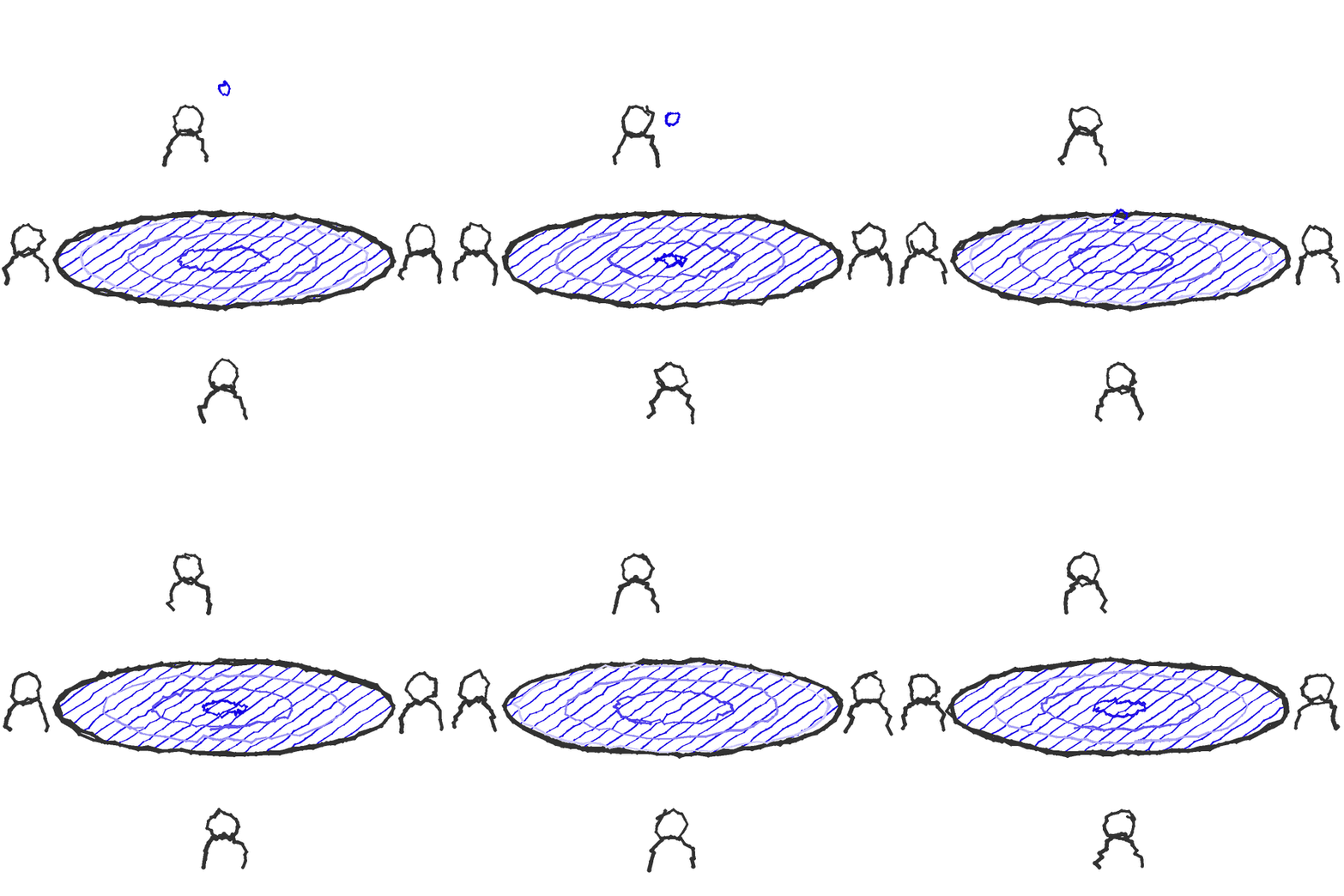
The Fountain — shared abundance
The Fountain spreads resources broadly. Everyone gets more cards, more mana, more tokens, more life, more access, and the baseline of the game rises with it.
The Fountain asks: What would happen if everyone had more?
Sample cards:
Howling Mine: Symmetrical card draw that elevates the pace of the game
Rites of Flourishing: Symmetrical extra land drop and extra card each turn, so the whole pod reaches late-game spells sooner
Collective Voyage: Political sorcery inviting the pod to search for more lands
Awakening: Symmetrical untap of creatures and lands for interaction
The Fountain speeds the game up and loosens it. Early mana and early card advantage weigh less when everyone is flush, and a bigger game gives political choices more room to matter. It also makes me stronger in ways I did not always plan for: more draws find more answers, more mana answers more situations.
Gor Muldrak shows the double edge. At the end of my turn, each player with the fewest creatures receives a 4/3 Salamander, and in Pods and Pilots those tokens built a cage around an aggressive opponent. The gift arrived whether or not anyone asked for it.
Who is already ahead decides whether a Fountain reads as generosity. The symmetrical draw that lets a stalled player catch up also lets the strongest engine at the table accelerate.
Risk: shared abundance changes the whole system. Handing everyone resources is still me shaping the game, and a Fountain with no protection or direction becomes a resource dump that carries an opponent to their win. Everyone gets the abundance, and one player usually gets the advantage.
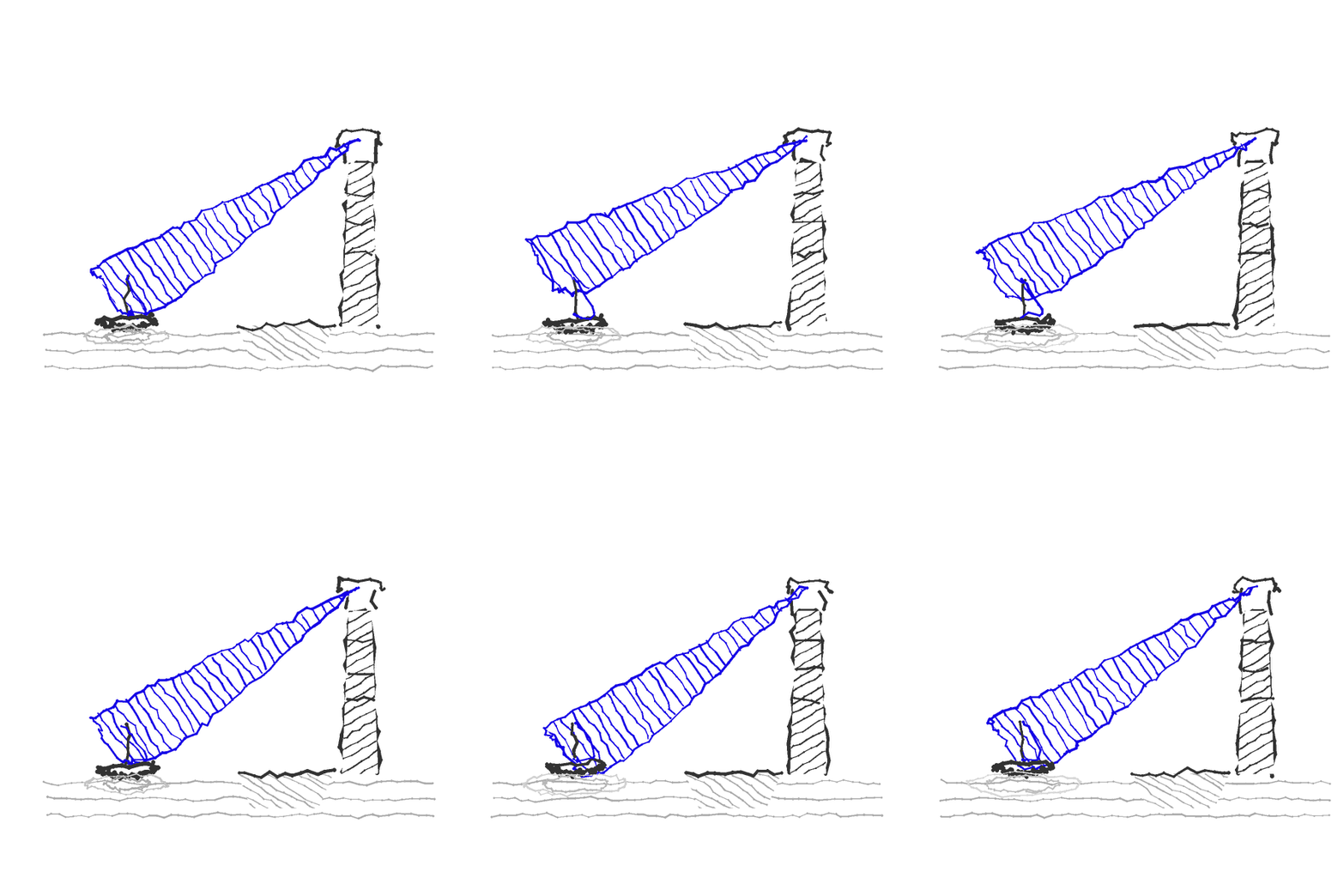
The Spotlight — targeted attention
Where the Fountain spreads, the Spotlight aims. It points generosity at a particular player, need, relationship, or moment.
The Spotlight asks: Who needs attention, and what will this intervention make possible?
Sample cards:
Wedding Ring: Gives an opponent a copy; you draw when they draw on their turn, and gain life when they gain life.
Gluntch, the Bestower: At your end step, you choose three players: one gets two +1/+1 counters on a creature, one draws a card, and one makes two Treasures.
Zedruu the Greathearted: Lets you hand an opponent one of your permanents and gain value when they use it.
Duelist's Heritage: An attack trigger that lets you pick one attacking creature, even an opponent's, to gain double strike during combat.
Spotlight is where I have to read the room: board state, hand size, threat trajectory, the emotional temperature of the table, and the difference between helping someone participate and helping them run away with the game.
A gift arrives as care, as bargaining, as obligation, or as manipulation, and the same card can mean something different depending on who receives it and when.
Risk: targeted Spotlight generosity can read as favouritism, as political overcommitment, or as an intervention that props one player up past the rest. The generosity still does what it does. The emotional and political weather of the table changes, and I have to live in the weather I decide to make.
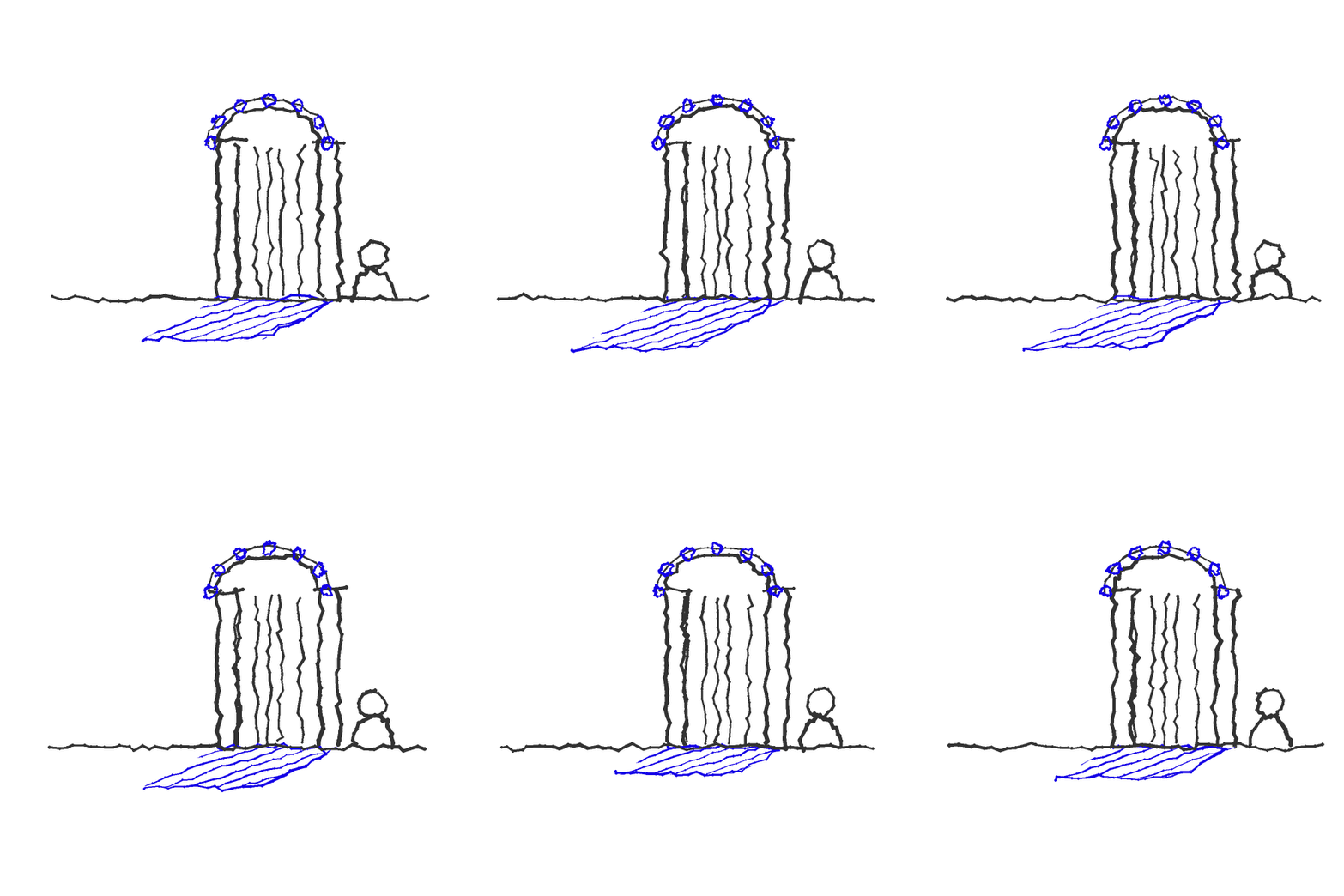
The Shadow — conditional pressure
The Shadow is generosity with a cost, a condition, a consequence, or a piece of self-protection attached. The gift still arrives. The Shadow decides what it makes possible and what it asks back.
The Shadow asks: What happens when abundance is allowed to carry its own consequences?
Sample cards:
Smothering Tithe: Each draw an opponent makes can be taxed: they pay {2} or you get a Treasure.
Forced Fruition: Whenever an opponent casts a spell, they draw seven cards, and it isn't optional.
Nils, Discipline Enforcer: Creatures with counters can't attack you unless their controller pays a cost equal to the counters.
Overabundance: Every land tap adds extra mana, but the player who taps it takes 1 damage.
Group Slug lives in this corner, and conventional control does too, but neither is what I mean. Shadow is how I put boundaries around generosity and stay able to act when the table's balance breaks. It is the gate around the garden, there so the garden can stay open.
Shadow usually looks like a Fountain with a price. Overabundance doubles everyone's mana, then charges whoever uses it. Forced Fruition hands over seven cards and lets the gift do the work. In Pods and Pilots, Gor Muldrak's protection from Salamanders had the same shape: the generosity could not exist without the boundary already in place.
The timing decides how the table reads it. A tax visible from turn one reads as a rule of the room. A tax discovered after someone overextends reads as a trap. So when someone asks what my deck does, I tell them the whole answer.
Risk: too much Shadow dresses the deck as prison or stax and eats the trust that lets the other two modes work. Shadow that only arrives as punishment once the game is already gone stops protecting anything and turns into grievance.
4. Two Axes: Architecture and Piloting
F/S/S runs on two related axes. The next section draws both of them on a map.
Axis 1: Architecture — before the game
Architecture is the philosophy I encode into the list:
card selection
ratios and density
the balance between Fountain, Spotlight, and Shadow
protection, interaction, and win conditions
the table states the deck is capable of creating
I write architecture before anyone sits down. It is a theory of play in 100 cards. If I never built Shadow, I will watch an opponent pull ahead and find nothing in my hand with an edge. If I never built Spotlight, I will see the player who needs help and have no way to reach them.
Architecture sets my vocabulary for the game. It does not write the game.
Axis 2: Piloting — during the game
Piloting is what I do with that vocabulary: read the room, change posture, decide who I am helping this turn. The questions I ask:
Who is falling behind?
Who is becoming inevitable?
Who has just become visible as the threat?
Does this moment want acceleration, attention, or restraint?
Is my gift helping them participate, or helping them win?
What does the table think I just did, and what will they think I meant?
Piloting carries the weight because timing, target, and sequencing change what a permanent means. Sorting cards into three piles does not use the framework. Noticing that the same Howling Mine rescues one player and buries another does.
The feedback cycle
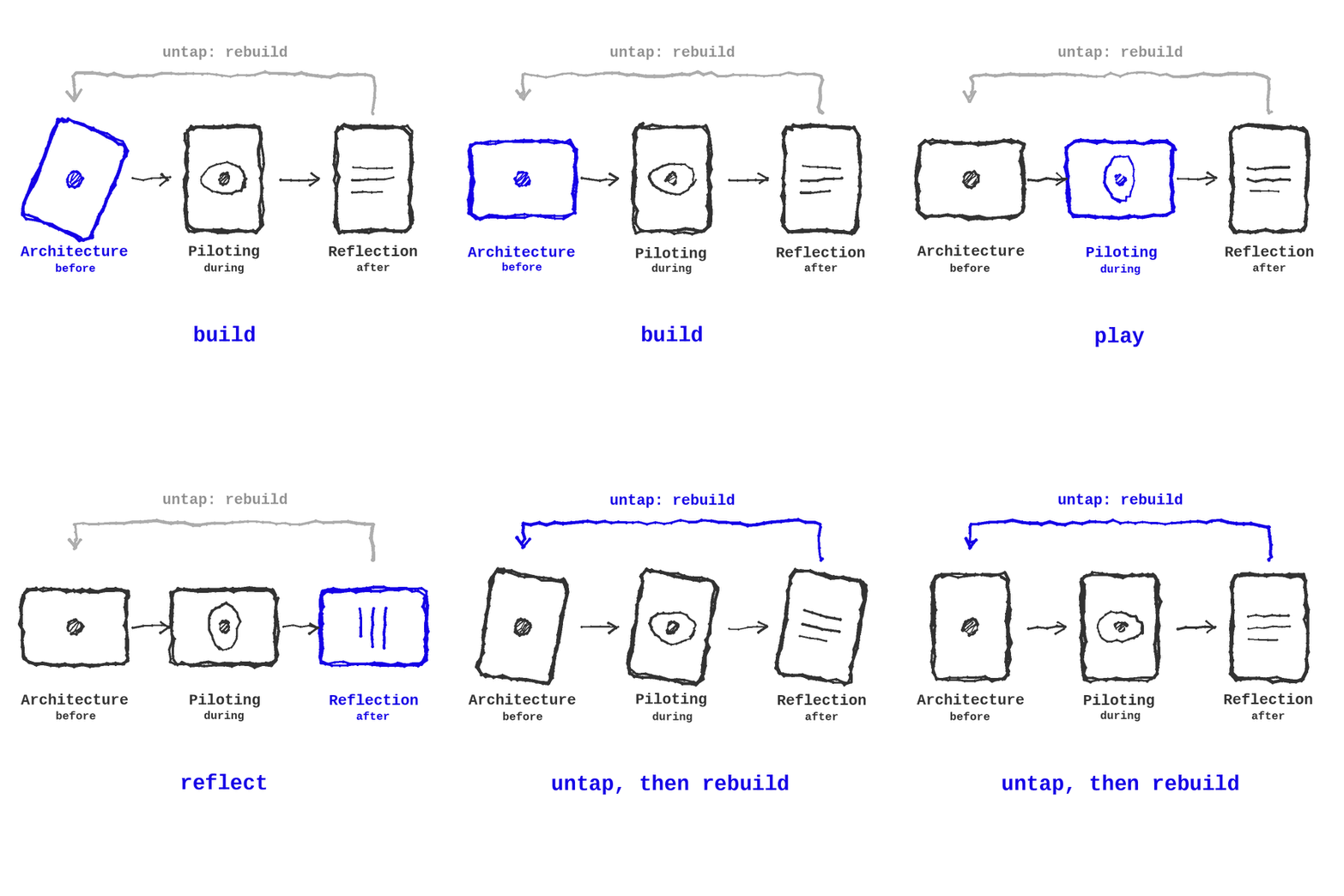
Build, play, reflect. Each step stays tapped until the rebuild untaps them all, and the loop starts again.
Architecture enables piloting, piloting reveals what is worth reflecting on, and reflection revises the architecture.
After a game, I ask:
Where did I need a mode I had not built?
Which cards sat in my hand and never mattered?
Did my architecture support the way I wanted to pilot?
Did I give too much, too late, or to the wrong player?
Did Shadow arrive as protection, or as punishment after the game was already gone?
The work is a loop: build, play, pay attention, reflect, rebuild.
5. Reading a Deck
A deck can hold all three modes at once, weighted differently. I read it in two steps: first in words, then on a map.
Intensity, in words
For each mode, I ask how present it is, and I answer in words rather than numbers:
Faint: barely there. The deck gestures at it and cannot rely on it.
Present: available when the table needs it.
Defining: the deck's identity. Take it out and the deck becomes something else.
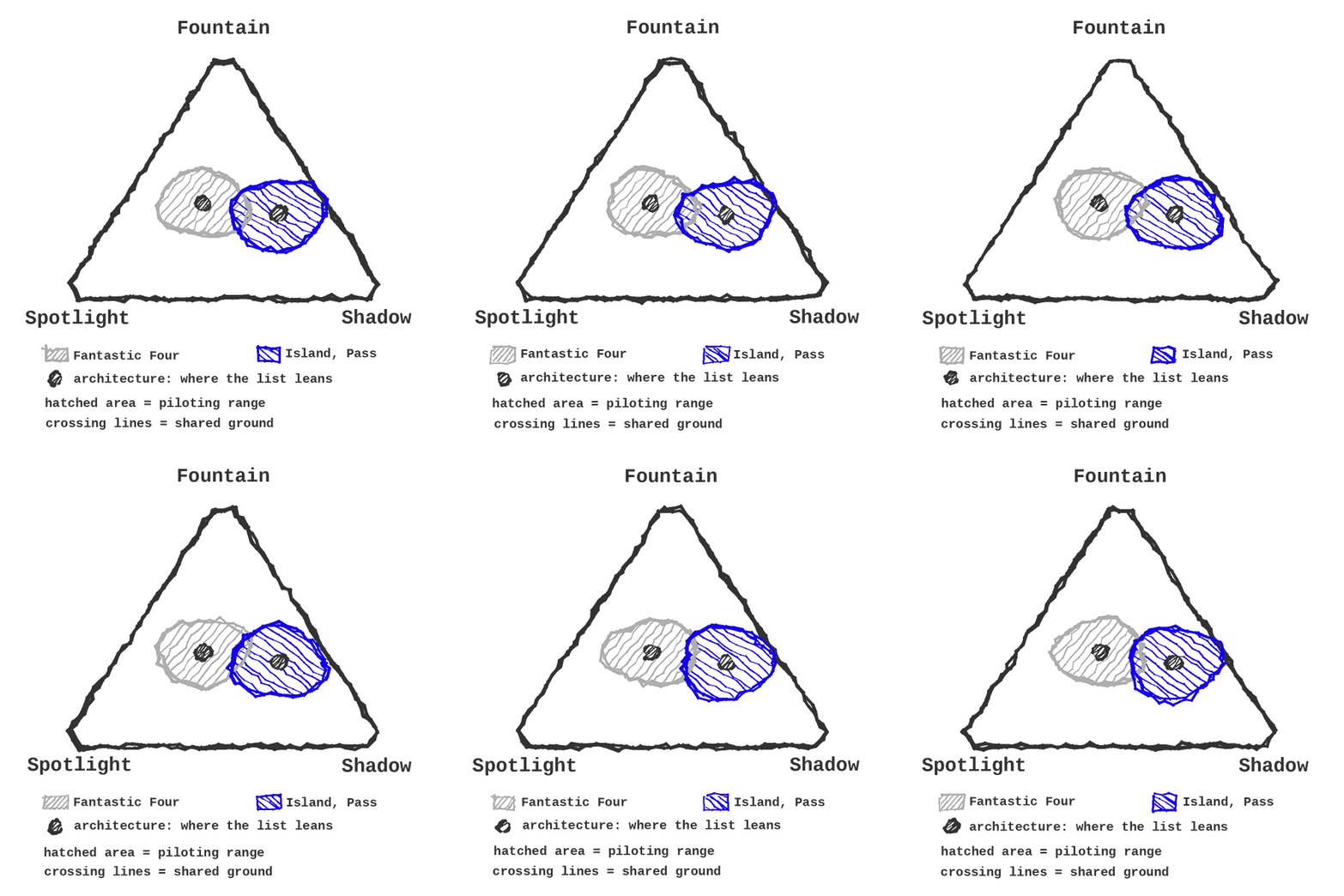
Absence is an answer too. Island, Pass reads as defining Shadow, present Fountain, faint Spotlight: its counters and instants break other players' tempo, and none of it is aimed at helping anyone.
The triangle
Fountain at the top, Spotlight at the bottom left, Shadow at the bottom right. The words place the deck: faint counts as 1, present as 2, defining as 3, and the deck sits at that mix.
The triangle shows the mix, not the total. Faint in all three and defining in all three both land near the middle, which is why I keep the words and the triangle together: the words carry how much, the triangle carries where.
Three things appear on the map, and each means one thing:
The dot is architecture. The one place the list leans, set before anyone sits down. It does not move.
The hatched area is the piloting range. Where I move during a game. I draw an area as well as a dot because the same list leans differently from one table to the next. The size of the area is my own judgement, and it changes as I play.
The grey line is brewing reach. The wider area a rebuild could open up.
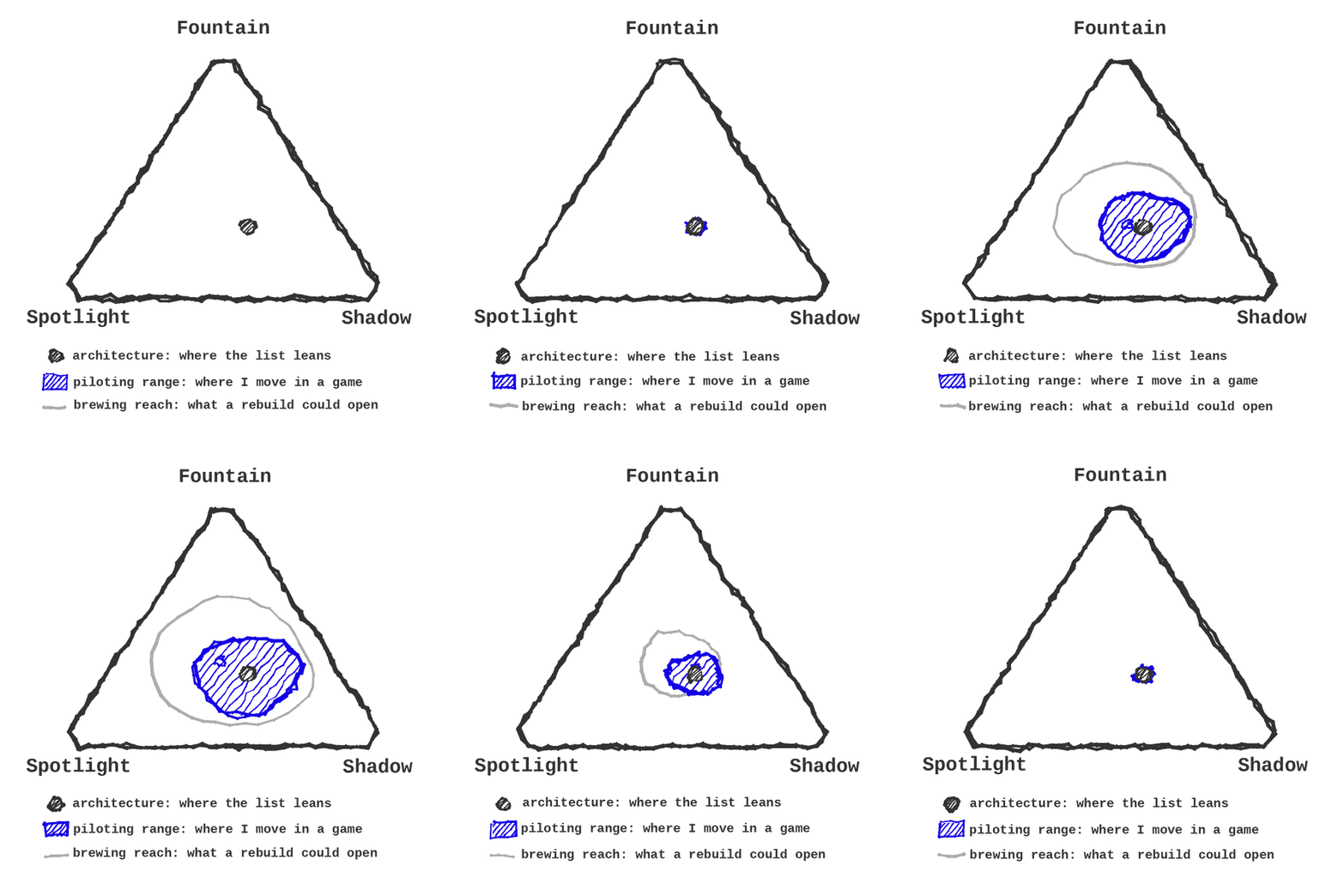
The dot stays put. The piloting range grows and folds back with the game, and the grey line shows what a rebuild could open.
A narrow range keeps me close to what I built. A wide range lets me change posture as the room changes, and I am a big fan of decks that give themselves that much room. I judge the range by eye, and it moves as I play and rebuild.
Two decks on one map
Fantastic Four is a lifegain Strategic Group Hug deck. At one point I give a lot of life to another player through a cumulative upkeep, for political gain and for deterrence. The political gain is Spotlight and the deterrence is Shadow, which is why Fountain and Spotlight both define the deck and Shadow is present.
Island, Pass runs on counters and instants that break the tempo of other players. Nothing in it spotlights or helps anyone, so Spotlight is faint. The open blue mana is the boundary, so Shadow is defining.
Everyone reads differently
These readings are mine, of my own decks. Put the same list in front of another player and it could land somewhere else, and I would rather hear why than defend my placement. Power here is what I notice a deck doing to a room, and two people can watch the same deck do different things. Bring me your reading. I would rather talk it through than be corrected.
6. What This Is Not, and Where It Breaks
F/S/S is not:
a power-level bracket;
a ranking of players;
a fixed identity that a player must inhabit;
a claim that every Group Hug deck should contain the same ratio;
a replacement for Rule Zero or a conversation about expectations;
a licence to call manipulation generosity because the giver benefits; or
a substitute for paying attention to the actual people at the table.
The three words name what I am already doing when I sit down. They help me see it sooner. They do not play the game for me.
Where it breaks
I do not want F/S/S to become another bracket system that tells you what your deck is before you have said how you want to play it. It earns its keep in the conversation it opens and the attention it asks for.
The safeguard is keeping piloting primary. Architecture matters because it hands me options, and the question I keep returning to is: What does this room need right now? If the framework sharpens that question for you, keep it. If it does not, leave it on the shelf.