Alone at the Vantage Point
Why Did You Give Away Your Island? This is part of a five-part essay about a question that sounds like it belongs to a card game but isn't really about cards at all: why would you give something away? It's told through Magic: The Gathering, a game I play in a way most people find strange — not to beat my opponents, but to give to them. You don't need to know the game to follow along. It's really about generosity, power, and what happens when you build a room where everyone gets to play.
I remember it happening at one of the pods I never mentioned.
Someone asked to see a page of the notes I was writing. It was late in the game, somewhere around turns sixteen to twenty. I had noticed something interesting in the way my opponent responded to a card draw, so I opened the small notebook beside my playmat and jotted it down, alongside other observations. A line here about an unexpected spell. A word there about my opponent’s face. The handwriting got worse as the game went on. The player across from me noticed. He asked if he could look.
I showed the full spread of messy notes and handwriting. It's just notes on the deck, I'm writing about how it's playing for me. That was somewhat true.
Because the notebook was never only about the deck. It was also about him, and about the two other players at the table, and about how the room felt from where I was sitting, and about me. He smiled and went back to watching the opponent's turn, the way you'd hand back a phone. I wonder what he thought about afterwards.
Being the player who decides to build a room for the pod comes with its own share of loneliness. It feels like standing in a space you designed, watching other people move through it, and knowing that you're keen to shape the architecture in a way they might not see or appreciate or care. The loneliness of being the facilitator who volunteered before anyone asked. The one who sets the tone, holds the boundary, creates the conditions, and then steps back, arms folded, letting the room decipher and navigate.
There are two kinds of loneliness, and they feel nothing alike. The first is the loneliness of being misread. The one where you know what you're doing and the table doesn't. The second is quieter and much worse. It is the loneliness of being unreceived, of being given a cold shoulder after you offer the thing you're best at, and the room didn't even notice the offer was made.
I've been thinking about this since I started playing Commander, ever since I started noticing that I came to the table for something different than most people. I came to meet new people, I came to see their decks, to explore ways to make interesting experiences. To see what offers I can give and what bait could be taken. Games pursued not to win. Not to optimise. Not to prove anything. Just to sit down with strangers and see what happens when everyone has an opportunity for more and a different kind of weather.
Playing a Different Game
But "more" is a strange and slippery word in a room that prizes efficiency. I've sat across from players who seemed to measure the game by its math: optimal lines, fast combos, the clean execution of a plan. I've watched someone win on turn three with an infinite combo, and I remember the feeling that settled in my chest afterwards. It wasn't anger nor frustration, it was more flat. Emptiness. The game was over for me before it even began. I excused myself to look at donated cards, just to leave the pod. I didn't want to put myself through that again. That's not the reason why I play.
Over time, I've learnt to walk away from those pods. Without drama, without announcing it. A gentle turning of the body, a shift in attention, removing myself from a space that doesn't feed me any sense of feeling full. My body knows before my mind does because the shoulders tighten, the breath takes a second less and gets shallow, the posture shifts from leaning in to leaning back, and once I'm leaning back, I'm already gone.
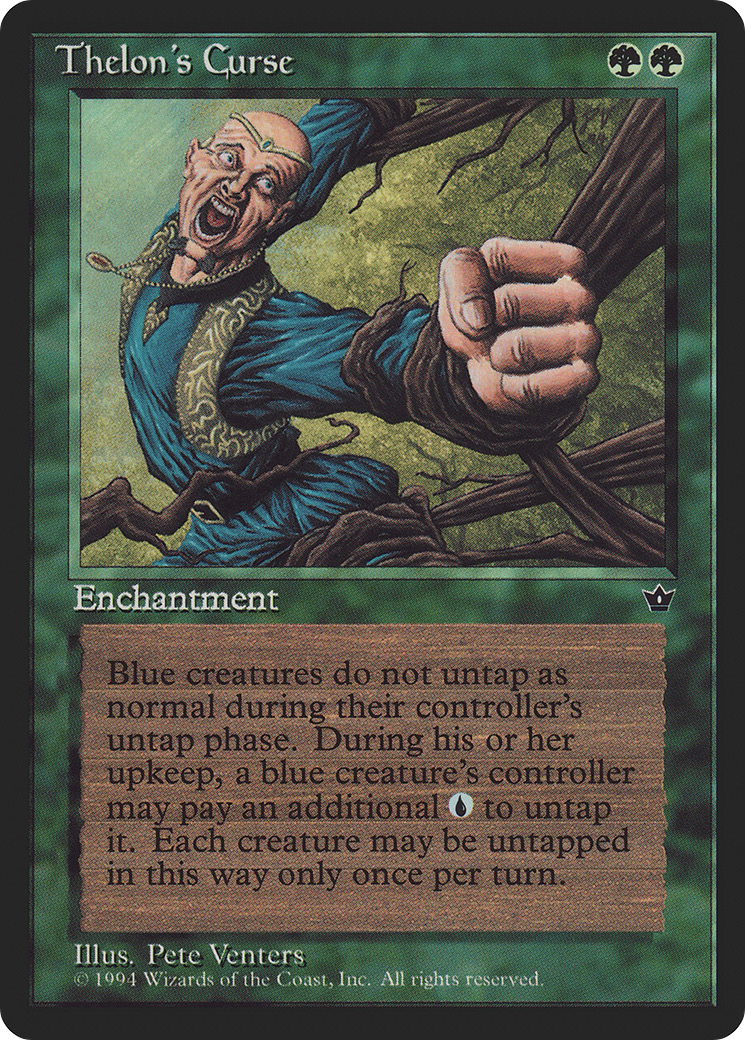
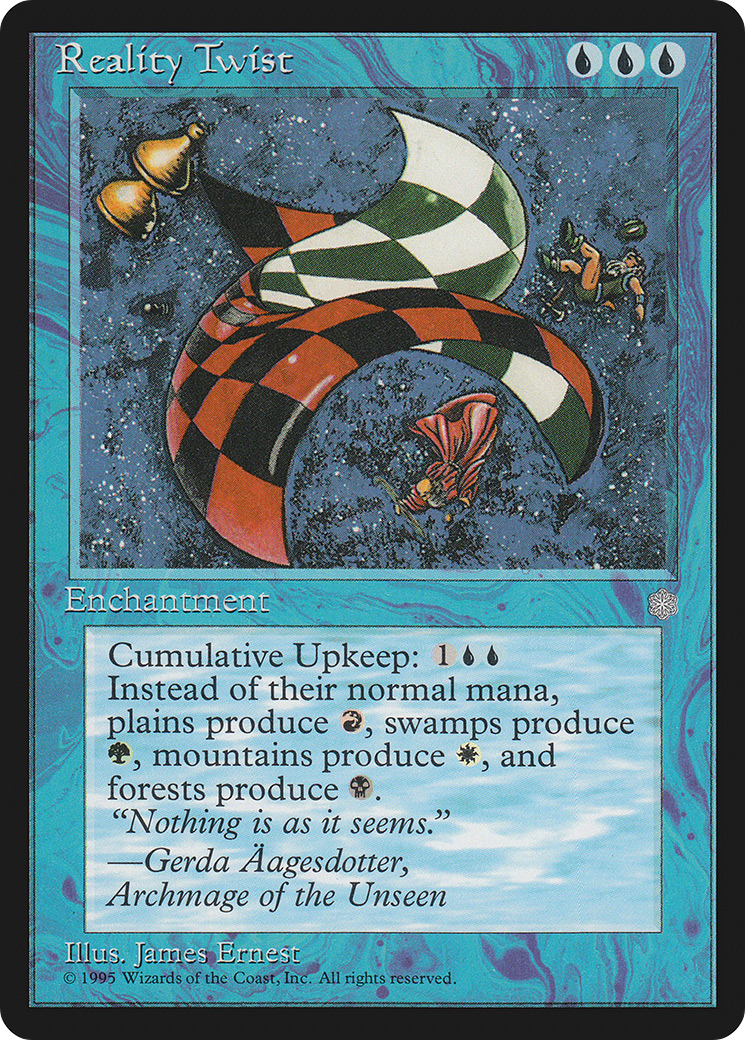
I'm aware that I play a different game. My vocabulary might be too different, and too "casual" coded for others. I don't subscribe to the meta of gameplay. I don't run tutors, and I don't chase the eighty-dollar staples people say every deck needs. I collect old, janky, obscure enchantments from the late nineties. Cards with text boxes so long and strange that people have to read them twice. These are my cards. These are the ones I keep. The rest can sound like noise to me; they don't belong in the worlds I want to build.
I know what that might look like from the outside: strange questions, unfamiliar cards. Maybe it looks like I don't understand the game, or like I'm choosing weakness over strength. Look at this naive player. I should show him how to use actual +1/+1 counters and walk him through the stack.
They Were Valuable to Someone Else
There was a card donation drive taking place as part of an upcoming MTG Community event organised by Denki. This was an opportunity for players to share their bulk with others. I had been purchasing a lot of cards, building up a collection, so I thought I'd bring some down.
I showed up with a bag of boxes one Thursday evening, just as people started making their way to play a session of casual EDH at the CC space. When Denki went through them, he kept stopping. He noticed cards that were worth money, not a fortune, but real money.
"I think this is still seven dollars leh," he said, holding one up, looking at me. I said, "Okay, that's fine." He kept going. He'd pull another card out, check its value, look at me. I'd nod. He seemed surprised that I wasn't bothered.
At one point, before I left, I handed him more cards I'd found at the bottom of my bag. He thanked me. He said he was worried people might just snatch them all. I said I hoped people would share them with other players. I didn't want those cards. I have a lot of what I want already. The ones I gave away were valuable to someone else, and that was the whole answer.
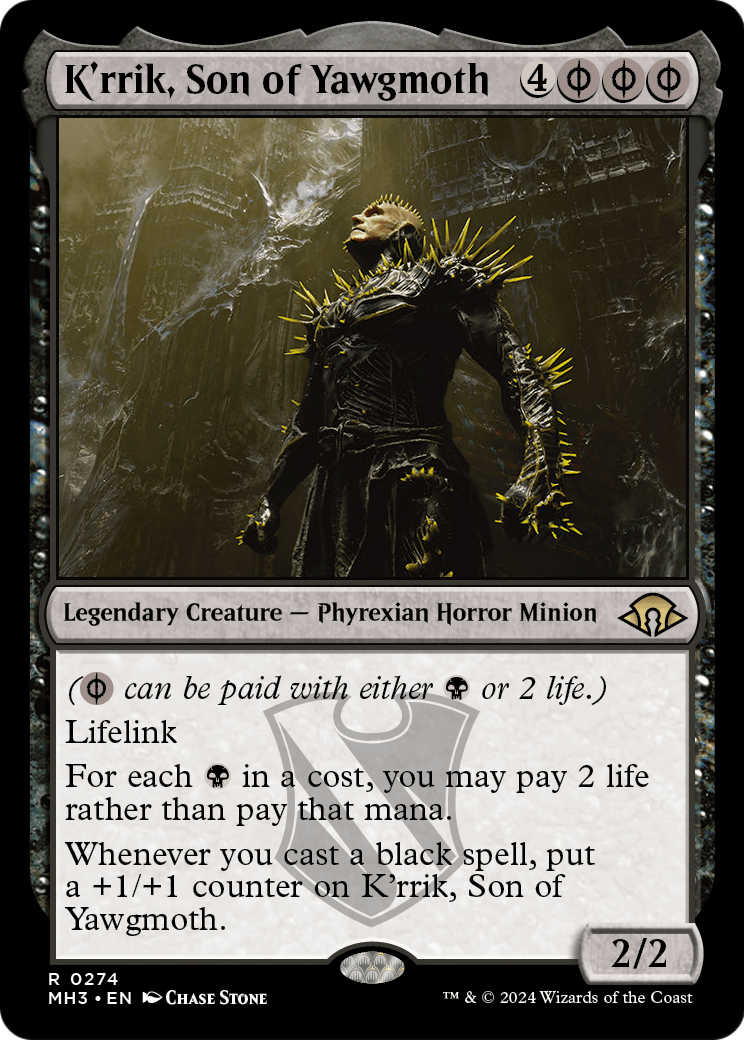
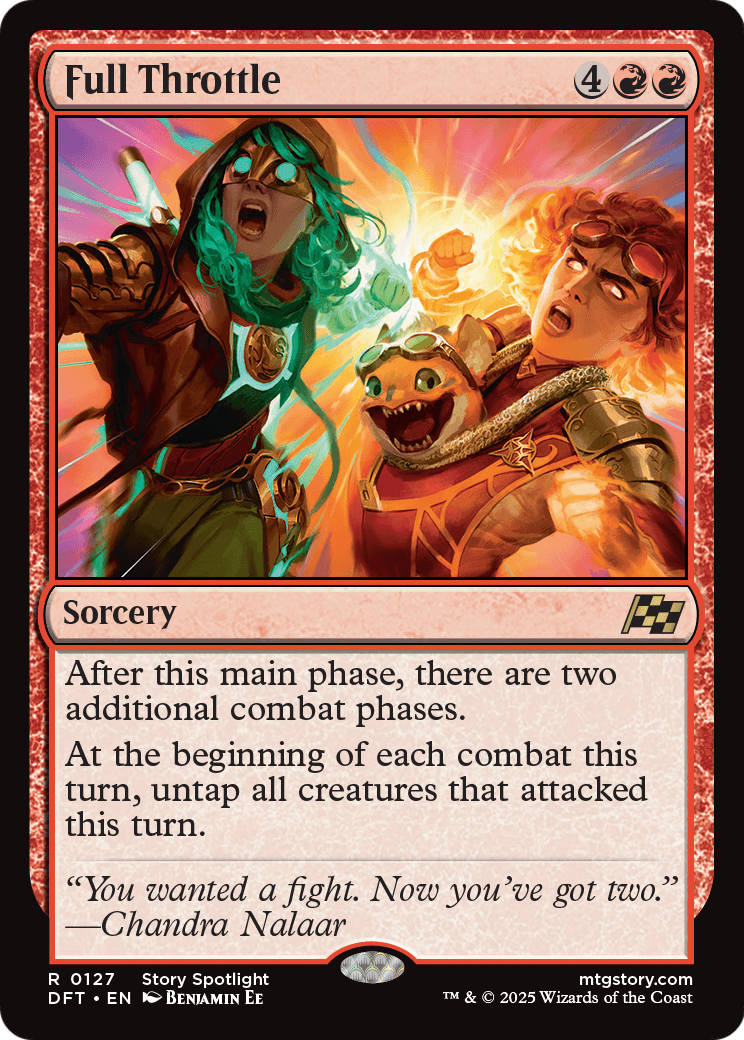
Denki's surprise stayed with me even though I understood why he reacted that way. In the trade economy of TCG culture, a card's worth is its market price. You hoard anything with a price tag. You trade up and regenerate. You protect your portfolio. When I handed him a seven-dollar card and said that's fine, perhaps I was speaking a language he wasn't used to hearing at a card event.
I wasn't performing generosity. I wasn't making a point, though perhaps people might say otherwise. I was just being myself, the same person who slides an Island across a table to a mana-screwed opponent, the same person who builds decks around giving things away, the same person who chooses texture over value every single time. The person at the table is the same person outside it. There's no code-switching.
Walking Into GOG
My values are the same on both sides of the table. I measure a card's worth by what it does for the person holding it.
A few weeks later, I walked into GOG.
Grey Ogre Games. A local game store with a reputation based on the whispers I hear. Serious, aggressive, the kind of place where the pods are fast and the players are sharp. I'd built it up in my mind as hostile territory. A room that wouldn't understand my kind of play. I brought three decks with me: Sokrates, Fantastic Four, and Gor Muldrak. Three different introductions. Three different ways of saying: this is who I am.
The pod formed through a local chat group. OB initiated the pod, a relaxed, jovial player with proxy cards and an easy laugh. OA joined, a family man, recently moved to Singapore from Sydney, here on a short work trip with his wife and child. Friendly, measured, somewhat new to the store. We arrived at the store where the tables were all packed and filled up. We had to wait until we got ourselves a chair.
And when we did, OC arrived. He sat down without introducing himself, without disclosing his deck, without participating in the Rule 0 conversation the rest of us were having. He appeared. A random player who saw an open slot and took it, which made sense.
There was a hunch. The way he carried himself. The social opacity, the refusal to engage with the pod's collective agreement. When I pushed him to disclose his bracket, he said his deck was B3-4. The rest of us were playing B2-3. "Oh wow okay, well I think that's quite powerful for this pod." A boundary, set out loud. But he stayed anyway.
I didn't ask whether the table wanted me to hold that authority. I didn't notice that I had picked it up. Somewhere between the shuffle and the first land drop, I had become the person who decided what this room was going to be.
The Silent Counterspell
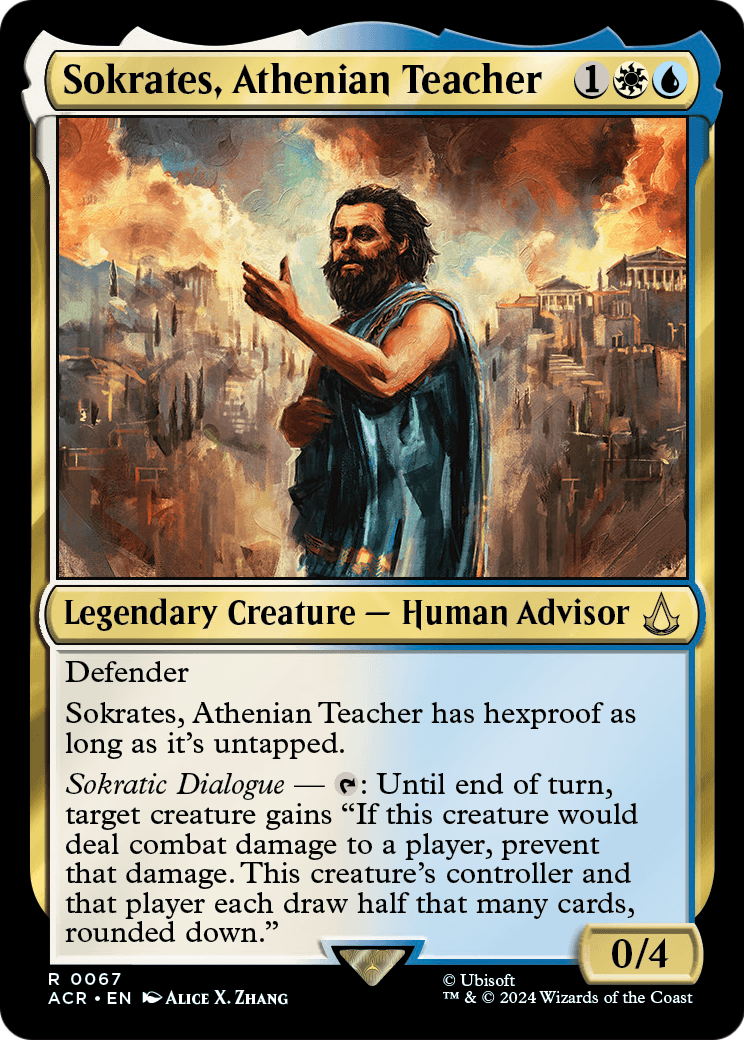
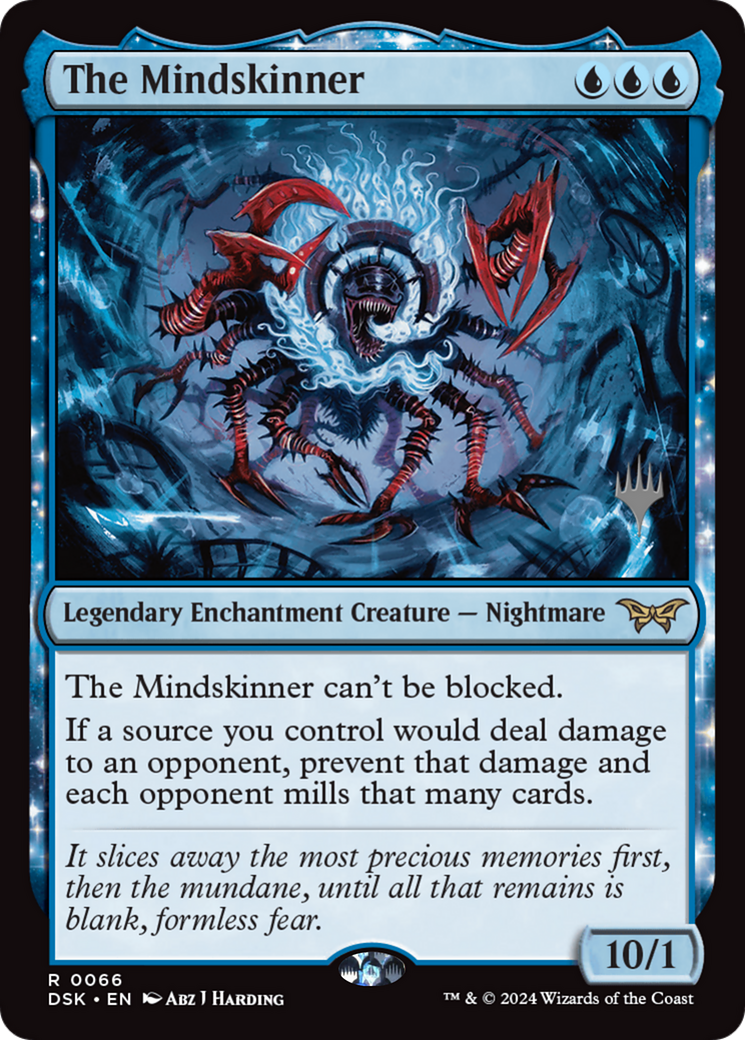
Game 1 was Sokrates. I played my commander, prevented damage, drew cards. OC attacked me, expecting me to tap Sokrates and grant the card draw. I let the damage through instead. He went still and quiet. He let out a brief sigh, and then nothing. The silence of a player who expected a resource and found a boundary instead. By turn 8, OC commented that he didn't expect Sokrates to be so strong. I took it as recognition. The deck was doing what it was designed to do: provoking conversation, reshaping expectations, making people notice.
Later, OC announced he had the cards for a winning turn. He spent fifteen minutes narrating and executing his monologue, his commander, his creatures, his mana, his spells. A long, absorbed performance. And during those fifteen minutes, OB looked at me, smiled in silence, and held up a counterspell in response. OC was tapped out. He couldn't respond. His winning turn collapsed, and he never saw it coming, too absorbed in his own performance to read the body language happening right in front of him.
That smile. That held-up card. That silent exchange was the real game happening underneath the one OC thought he was playing.
OC left after the first game. And the atmosphere shifted like a window opening in a room that had been sealed shut. Another player arrived. OD was from Europe, studying and based in NTU. We connected over the shared affiliation, two people in a room full of strangers, finding a thread of familiarity in the institutional hum of a university neither of us was quite done with yet.
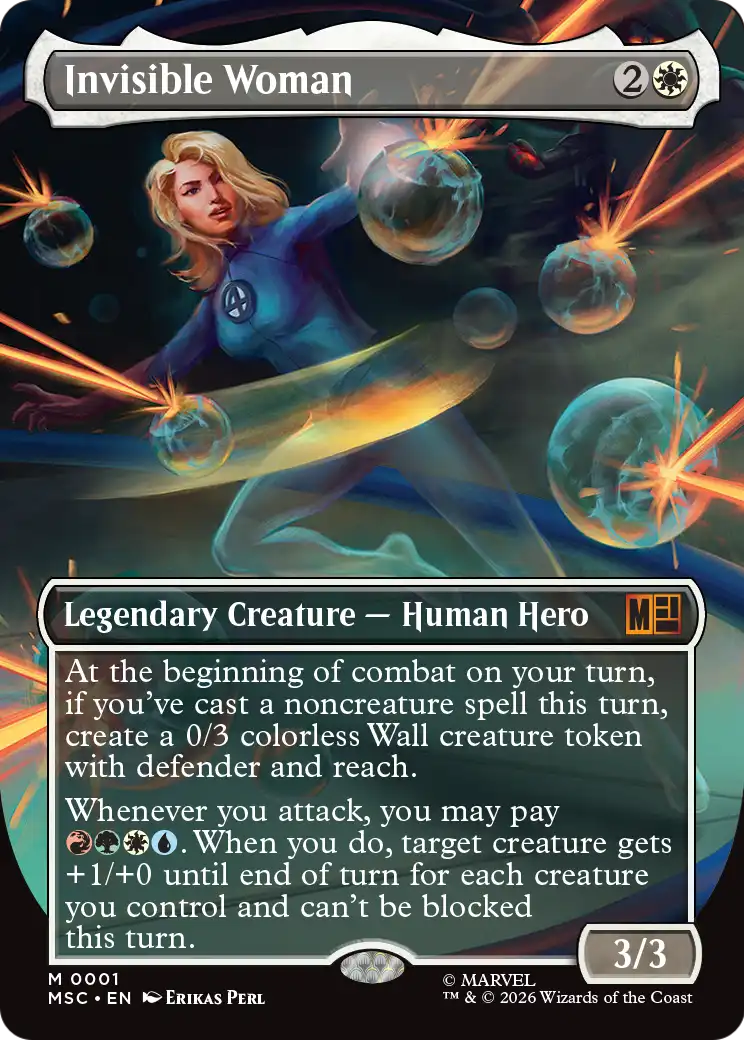
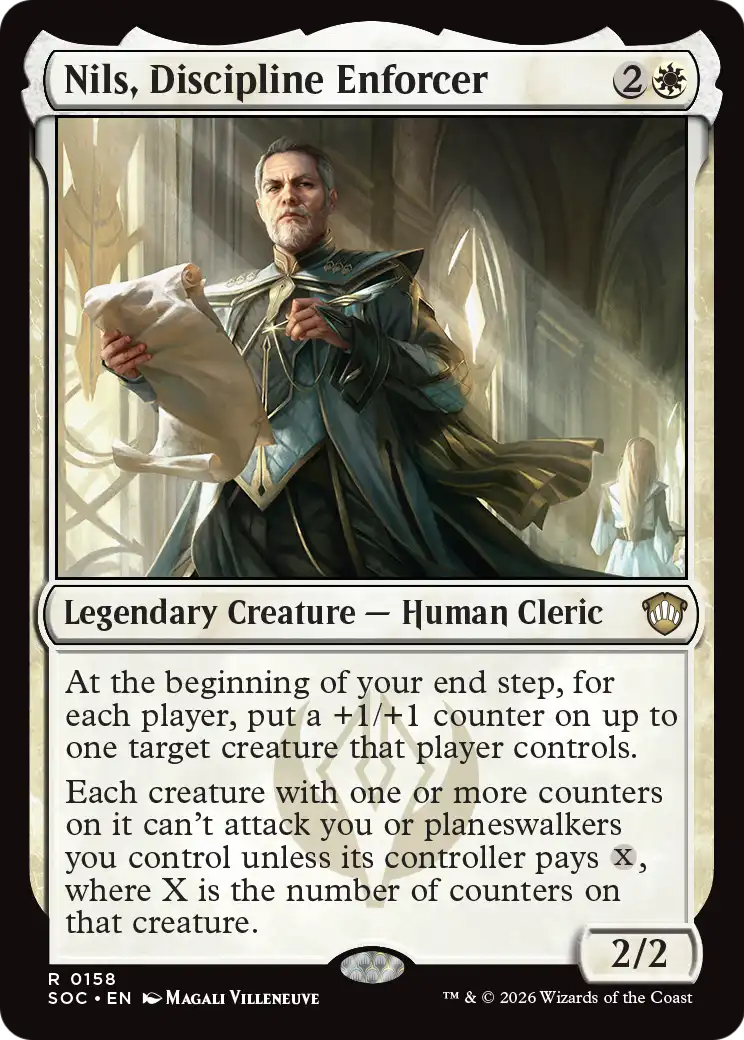
Games 2 and 3 were lighter. Warmer. The pod breathed for once! I played Fantastic Four and distributed counters to everyone: gifts that came with hidden costs, +1/+1 markers that taxed anyone who tried to attack me. The table realised what was happening. OD adapted, blinking his commander to dodge Gor Muldrak's salamander transformation. OB recognised the chaos and smiled through it.
OA played at his own pace, unhurried, taking his time with each decision. And then, as he was leaving to attend to his wife and child, he stopped and said: "Thanks for being patient with me."
Seven words. I felt them in my chest, the way you feel something that confirms what you've been hoping but didn't dare to assume. He saw it. The patience was architectural. I had set the tone before the first land was played: pushing OC to disclose his bracket, naming the power mismatch aloud, making the implicit explicit. The holding environment wasn't an accident. It was a gift, one I gave without expecting acknowledgment, and one that arrived anyway.
A Room That Waits
I walked into GOG expecting a hostile room. I've heard the rumours and stories. But I found a holding environment instead, one I had built without knowing I was building it.
And that's when the loneliness started to shift. Because yes, the loneliness is real. I'm the one managing the room, reading the energy, setting the boundaries, creating space for others to play at their own pace. I think I'm also the one who sees the whole board. But seeing the whole board comes at a cost: it takes labour most people never see. That's the cost of being the vantage point.
But back at GOG, OA saw it. OB felt it. The architecture creates distance and something unexpected: the kind that looks like winning or optimising or fitting in. It looks like a family man saying thanks for being patient with me on his way out the door, and like a shared smile across a silent table while someone else's combo falls apart. Did I build the room, or did the room build itself and I just happened to be the right person to stand in it?
Perhaps the loneliness only looked like a rejection. For a while it was a vantage point: I could see the whole board, and the whole board could see me seeing it.
But I want to be careful about what that thank you proves. It proves the patience landed and the room was warmer for the way I held it. It does not prove I had any business holding it. Those are two different questions, and I had been answering the easier one and calling it the answer.
Nobody appointed me. Nobody asked me to set the terms of the room, or to decide which deck was too strong for it, or to keep an eye on the newest player. I did all of it anyway and took the thanks as confirmation that I had been right to. They were never a vote.
And if I'm being honest about why I do it (well writing this essay has earned very little if I'm not) I wanted the room to notice that I was the one deciding whether it opened or closed. When players paused before casting into my open mana, I felt the pleasure of being consulted. I had been telling myself that I wanted to create space for other people. There were moments when what I wanted was also to be seen creating it.
I know what to do with an offer. I don't know what to do with the possibility that I needed to be watched while I made one. Perhaps the question is what kind of power I've been holding every time I sat down and chose to give, without anyone needing to name it. The loneliness of being the vantage point is real, but then so is the room right?
Thursday Night Magic
Some weeks later I played in a pod up north. A community night in Sembawang, in a room with too many tables in it. The pod formed the way pods do: people sat down, we said brackets, everyone said three. One player told us his decks were very combo-driven and then put his commander on the mat. The conversation took around two minutes. To be honest, it always does.
During one of the games, I decided to keep my mana open. I do that sometimes. Untapped lands are a sentence you don't have to finish. "I have something, and I haven't decided yet whether you'll meet it." Paired with a deck that's hard to read, it's meant to make a table pause, ask each other questions, treat the turn as a negotiation. I held it open across several turns and watched for the hesitation.
Nothing came back. The table looked past the open mana the way you look past furniture. And I sat there noticing that I had been counting on a response I never asked for.
A combo arrived, unannounced, and the game ended the way it had been going to end since the first turn. When you play enough games, you start to notice that there's a particular sound a table makes when one person is playing and three are watching. It isn't silence. It's the small, polite noises of people being good company about something they're not enjoying. I said, to no one in particular, "What a shame. I actually wanted to play more." A newer player to my left looked up and agreed.
I kept the agreement rather than the loss, and two people ended up on the same side of the same nothing. That's the side effect I didn't see coming. The deck worked as designed; what had gone wrong was my expectation of the room. And that, most of the time, is what the notebook is for: recovery.
At GOG I built a room and a man thanked me for it on his way out the door. Here I built nothing, and it wasn't because anybody stopped me. I had brought the whole architecture with me and it turned out the architecture needs a table willing to stand inside it. Which means it was never mine to build alone.
Nobody gave me the right to decide what the room should feel like. What the room was ever getting out of my deciding is the harder question. The night nobody consulted me was the night the facilitation disappeared. It never had anywhere to live.
And so I got home and opened the notebook anyway.