Untap, Upkeep, Draw
Why Did You Give Away Your Island? This is part of a five-part series about a question that sounds like it belongs to a card game but isn't really about cards at all: why would you give something away? It's told through Magic: The Gathering, a game I play in a way most people find strange — not to beat my opponents, but to give to them. What happens when the game becomes about generosity, and power, and what happens when you build a room where everyone gets to play?
A Twenty Dollar Promise
I arrived the way most outsiders do.
Moving adrift, unmoored, passing through the gargantuan hum of the Singapore Comic Con without a map or a compass, right after seeing my friend with his beautiful keycaps. It was November, and I found myself standing before a starter kit from the Final Fantasy set. A twenty dollar rectangular promise of something I didn't yet understand.
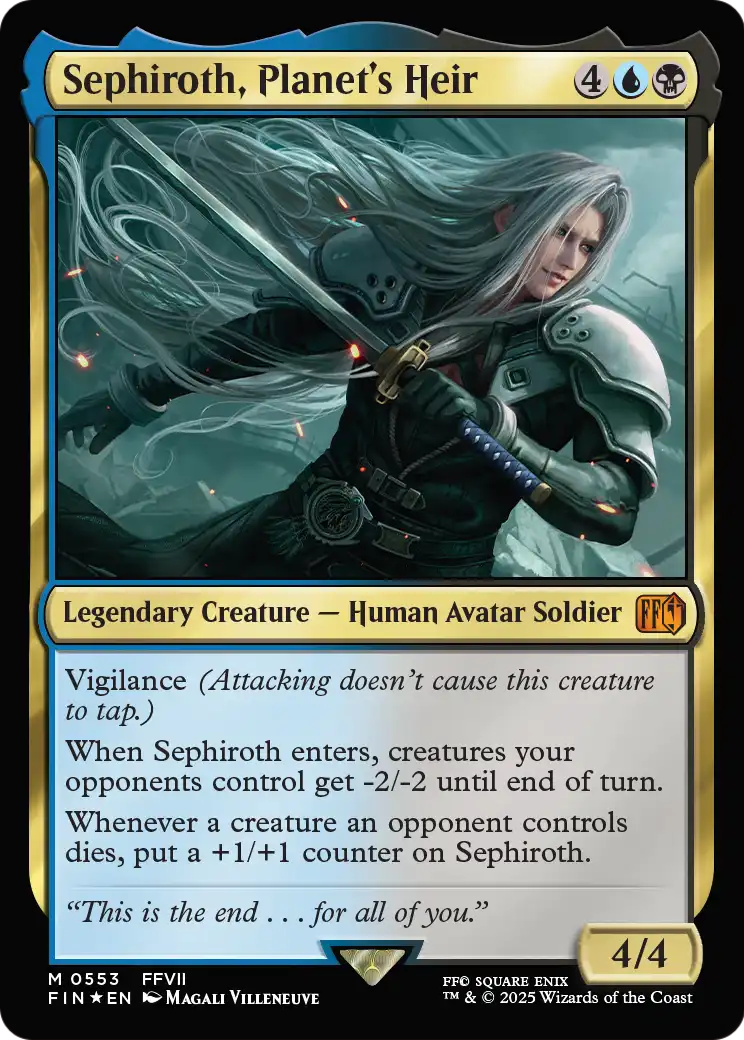
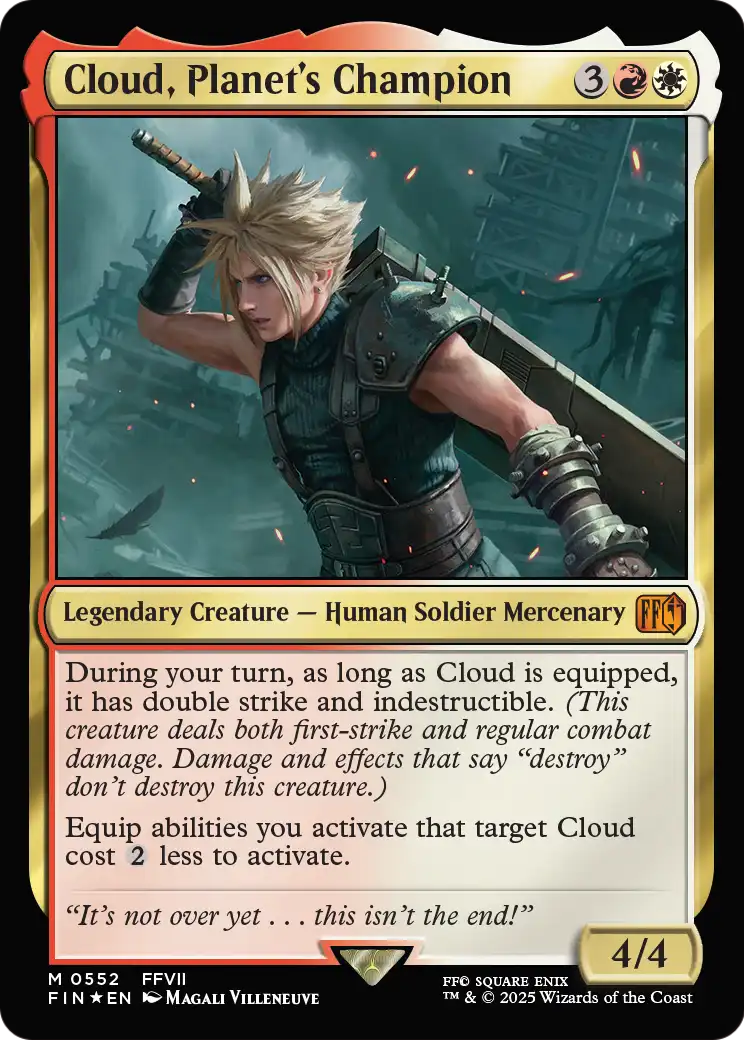
When my eyes caught the illustration of Cloud and Sephiroth, nostalgia didn't shy away to pull me under. I was suddenly back in the quiet, static-filled hours of my youth, clutching a crumpled sheet of paper printed from GameFAQs, the ink smudged by the heat of my own focus against Emerald WEAPON. That was great. Final Fantasy was great. Maybe I should give this a shot.
Days later I shared the purchase a friend, and I remember he looked at me with a knowing, almost weary kindness. Get ready. This will be the start of it all. It felt quiet and heavy, as if I had dropped a large stone into a well I couldn't see clearly.
The Guide for Lavender
But there is a particular kind of grace in being a bashful beginner.
Because I found myself scouring Carousell, that digital bazaar of forgotten things, eventually purchasing a box of bulk cards from a colleague at the university. He was a quiet, generous guide, the kind of person who understood that entering into a new world requires a steady hand, and I suppose a gentle form of masking. He walked me through the streets of Lavender, past the storefronts that hummed with the low, intense energy of players lost in their own private wars. It was only later that I discovered we worked at the same university — different departments, different orbits, but the same campus, the same corridors of institutional hum.
I think about that sometimes. How the game finds you through the people you'd never expect, in the spaces you already inhabit but haven't yet truly seen. There's something about Magic that dissolves the walls between the roles we perform — colleague, stranger, teacher, student — and asks you to sit down as simply, plainly, yourself.
One evening, we huddled together on campus and played a round of Standard with that starter kit. I was focused on the mechanics, on the simple, clumsy act of learning the rules. We finished, and I asked something — I don't remember what — and he mentioned, almost in passing, that he was heading overseas to compete.
And I remember my hands releasing the cards. Not throwing them, not folding them, just letting go, the way you set something down when you realise you've been holding it too tightly. Wow, all this time? Because there had been no scuff of ego, no jagged edge of the veteran performing for the novice. Only the patient, steady rhythm of a teacher — and the quiet, bewildering revelation that the person I was learning from is already living in a much larger world than the one I'm sitting in.
What If the Game Was Fun?
In early December, I came across the first-place foils from Aetherdrift.
One of the most polarising and mechanically underwhelming sets in recent memory. No one spoke of it in my commander pods, and rightfully so. With its misaligned expectations between vehicle mechanics and conceptual flair, Aetherdrift disappointed the long-time players by distancing itself from the dark, gothic lore they craved. Everything about it was timed so unfortunately that it made sense why the community responded with such coldness to these brightly yellow-coloured, graffiti-styled cards.
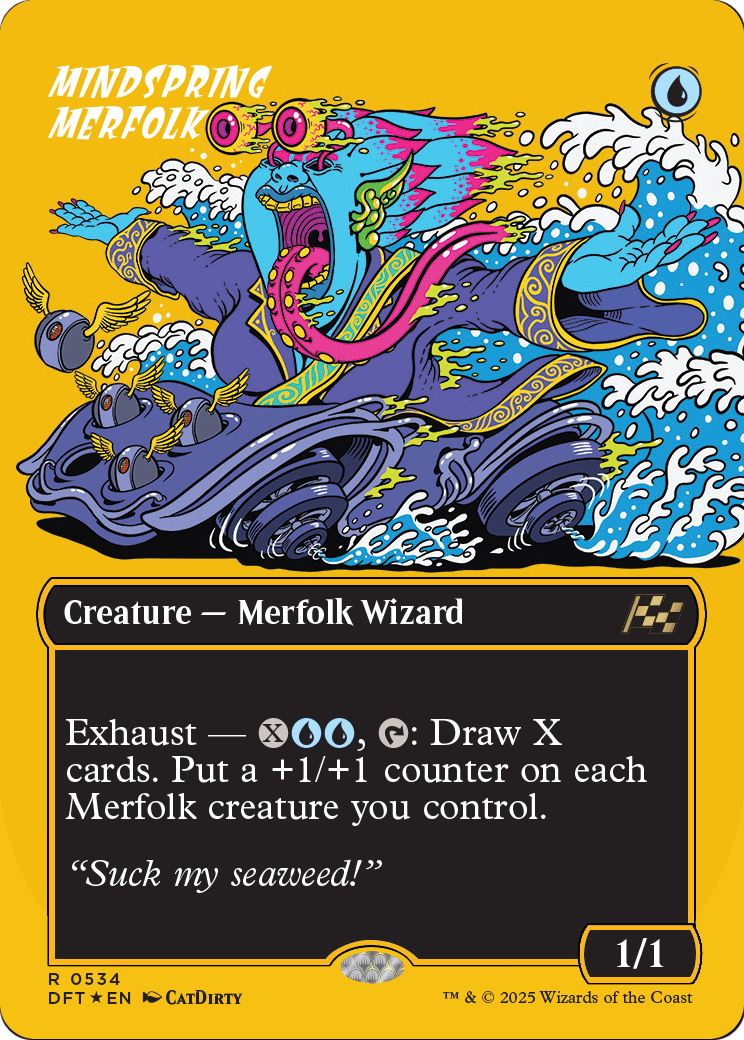
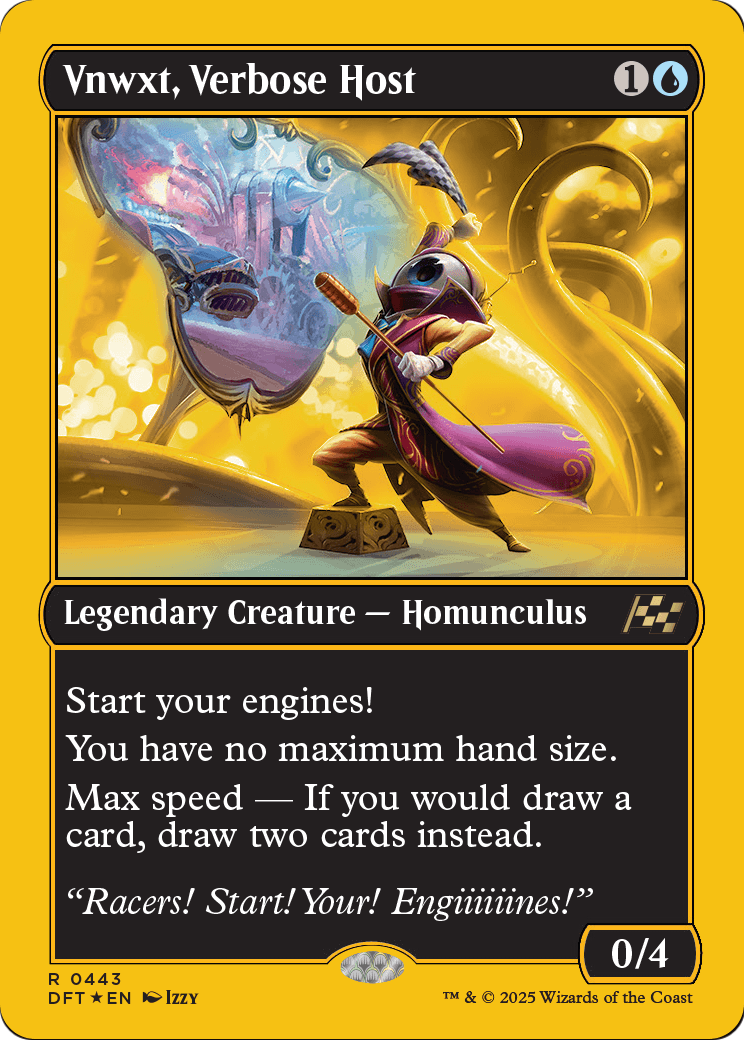
And yet, that is precisely why I love Aetherdrift as a set and as a marker of change and difference. That bright, rebellious yellow became a provocation; it walks into a room full of Phyrexian body horrors or typical black beasts from the meta and asks, with a smirk, what if the game was fun? There is a delicious irony in the set's speed mechanic, a set built around the promise of momentum that the community dismissed because it plays, in reality, quite slowly. I'm a big fan of context, and of contrast. I live in that gap between what a card says and what it actually does.
I didn't see it then but I see it now. Its vehicles require crewing — inert, hollow shells until you commit your own resources to make them move. A facilitation mechanic disguised as aggression. Aetherdrift reaffirmed my entire philosophy, the very card type that embodied my own mirror, my own identity. I bought a collector booster box. And when I finished opening the last pack, I stopped being a player and started being a curator. Or at least, that's the word I reach for now, though it keeps shifting under my fingers.
Because to curate is to choose with intention, and I was clearly choosing cards that felt like a choice. The cards I gravitated toward had nothing to do with market value, which I'd come to understand as a narrow, borrowed kind of worth. I was choosing for texture, for the way a card felt when it sat on the table. But curation, I was beginning to learn, wasn't only about what you collected. It was about who you sat down with, and what you were willing to let the game become. When I played enchantments — those slow, permanent architectures, I wasn't just building a deck. I was shaping the environment. Curating the tempo, the symmetry, the conditions under which everyone else got to play. What does it mean to curate a shared experience? I'm still not sure. But I knew, even then, that I wanted the table to feel a certain way.
Each Player May Draw a Card
I remember buying Kwain for the first time.
I loved his fair and symmetrical ability of giving everyone cards and giving everyone life. I remember discovering Phelddagrif and her helpful abilities, giving my opponents flying or a blocker for their next combat. I remember acquiring Stalwart Unity over at Mox & Lotus one afternoon, and learning more about Kynaios and Tiro of Meletis — the couple well-known to always give and give and give.
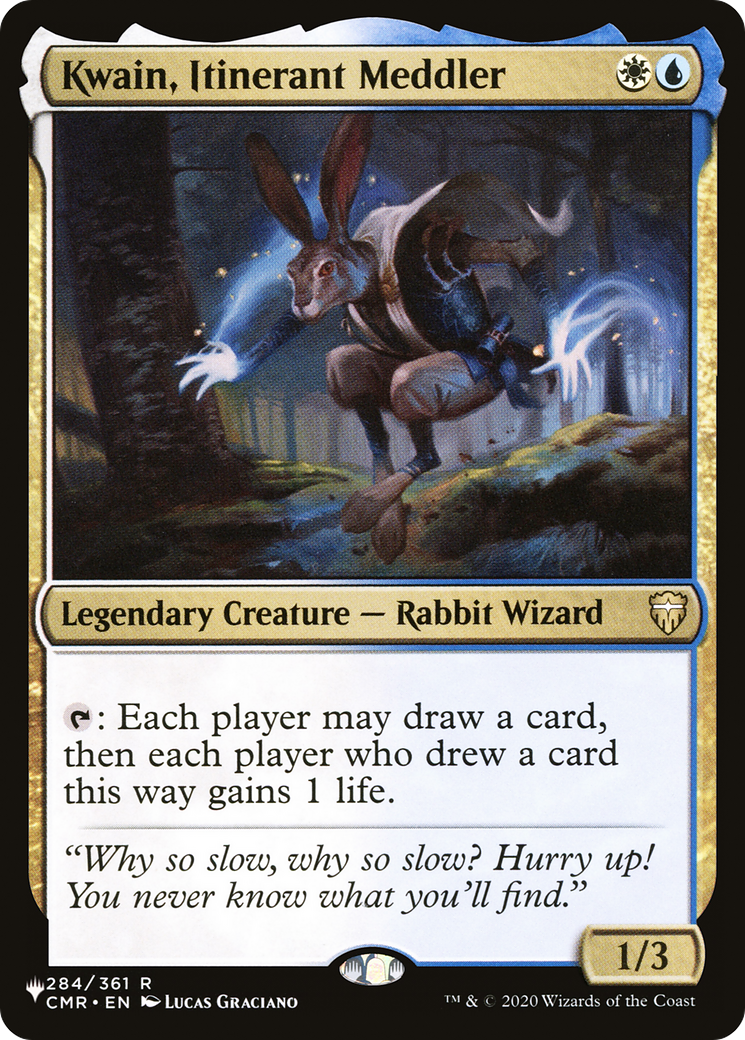
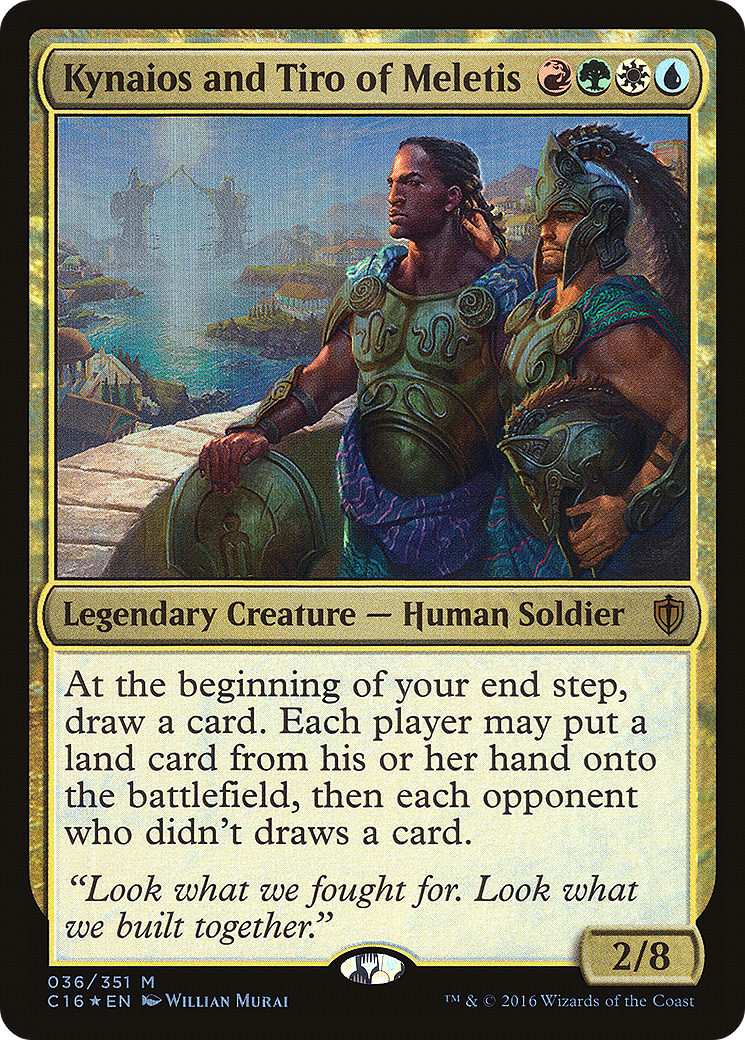
I didn't know what I was doing. I only knew that the cards that made me feel something were the ones that made everyone else feel something too. Not the ones that said "destroy target creature." The ones that said "each player may draw a card, then each player who drew a card this way gains 1 life."
I was building my way towards a play style I didn't have the language for. Enchantments — the slow architecture of permanence, the way a single card can sit on the table and quietly rewrite the rules of engagement for the rest of the game. Group hug — the radical act of making your opponents' decks work better. I didn't know it at the time, but I was constructing a philosophy out of cardboard and ink. I was learning to facilitate.
The Most Disruptive Gift
As I continued discovering, I also started going to more events. Weekly Commander nights, community centres, local game stores. I didn't know that Commander had a social contract — an unspoken set of rules about how you’re supposed to behave at a table. Rules that have nothing to do with the cards and everything to do with the people holding them.
I thought I was just learning to play. But somewhere between the starter kit and the enchantments, between Kwain's quiet generosity and Kynaios and Tiro's open hands, I was learning something else entirely. I was learning what kind of player I wanted to be. What I wanted the table to feel like. What it meant to have agency in a game built on conflict. Not the agency of dominance, but the agency of offering.
And I was about to find out that in a game built on combat and destruction, the most disruptive thing you can do is offer your opponents a gift.